

Industrial Digitization • Masna3y Pro by Technoraft
From Receiving Materials to Understanding Product Costs
Track production batches, expiry dates, quality, waste, and costs through a system that connects factory operations with accounting.
What Is Masna3y Pro for Food and Beverage Factories?
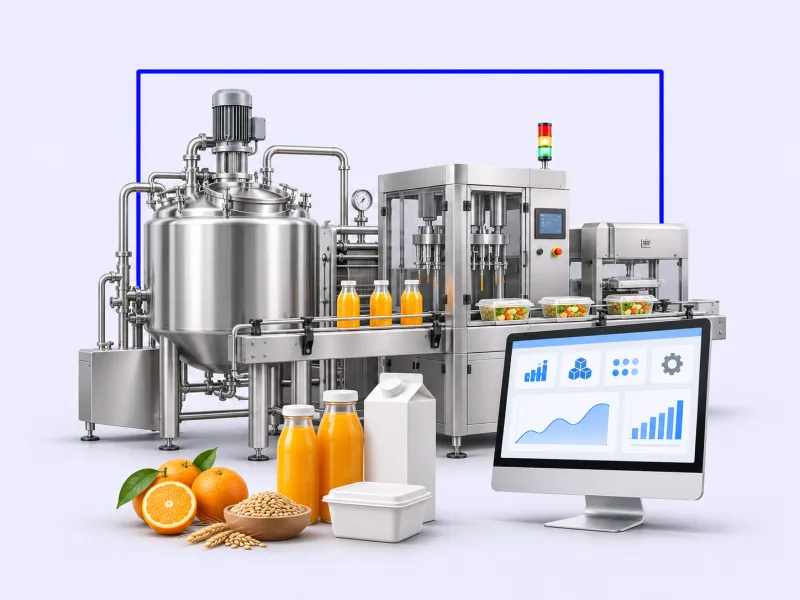
Masna3y Pro is a food and beverage factory management system by Technoraft. It brings together material, inventory, production batch, production date, expiry, quality, waste, and cost tracking, with reports supporting reviews of production, sales, and profitability.
In a food factory, quantities move between receiving, storage, production, and packaging. Meanwhile, management needs clear answers: Which materials were used in a batch? How much was actually consumed? What quantity was produced? Where did waste occur?
When those answers are spread across separate files and records, reviewing operations and costs becomes more difficult. A food and beverage factory management system helps connect this information and make it part of everyday operational review.
Technoraft Digital Solutions offers a Masna3y Pro edition focused on this sector, combining operational tracking with financial information. Explore its published capabilities on the Masna3y Pro food and beverage factory management page .
Why Do Food Factories Need a System Suited to Their Operations?
Managing food products involves more than recording purchases and sales. It also includes production batches, manufacturing and expiry dates, material status, consumption, inspection results, accepted output, and manufacturing waste.
An inventory balance alone may not explain how quantities are distributed across batches, expiry dates, and usage status. Similarly, a material’s purchase price does not independently explain the finished product’s cost without reviewing what was consumed during production.
Tracking Materials from Receiving to Storage
Operational control starts when materials arrive. The Masna3y Pro page describes recording incoming material inspection results, accepting or rejecting materials, and entering accepted quantities into the appropriate warehouses.
This sequence connects inventory movements with material status. Inspection details, permissions, and documents should be configured around the factory’s workflow and the agreed operating procedures.
Production Batches and Expiry Dates
The food and beverage edition presents batch tracking alongside production and expiry dates. Its reports cover batch movements, associated quantities, and their status within inventory. This gives stock balances a clearer operational context.
The page also describes inventory reports showing available, reserved, slow-moving, and near-expiry quantities. These views help teams identify stock requiring attention under the factory’s policies.
Review the Workflow Using a Relevant Example
One Material and One Batch Can Clarify Your Requirements
Request a demonstration of materials, expiry tracking, consumption, and costing using sample data similar to your factory’s activity.
Explore the Edition and Request a Trial Request a QuoteReserving and Issuing Materials for Production
The published page describes reserving materials for production orders and issuing actual quantities, with returns and differences recorded when needed. This connects planned requirements with warehouse movements during execution.
Teams need to distinguish between required, issued, consumed, and returned quantities. Clear definitions help users interpret movements and avoid treating every material issue as final consumption without reviewing the relevant records.
Comparing Product Recipes with Actual Consumption
Material consumption reports compare standard quantities in a product recipe with quantities actually issued and consumed. This helps identify differences requiring investigation, beyond simply reviewing the total quantity leaving a warehouse.
For example, suppose a planned production quantity requires 100 kg of a material, while actual consumption for the same output is recorded as 108 kg. The difference is 8 kg. This is an illustrative calculation; understanding the cause requires reviewing production, losses, output quantities, and units of measurement.
Production Orders: What Was Planned and What Was Completed?
The listed reports include planned, ongoing, completed, and delayed production orders, alongside required, completed, and remaining quantities. This gives management a structured view of execution.
When an order is delayed, the next question becomes more specific: Is the issue related to materials, processing, or inspection? Reports help identify what needs follow-up, while timely and accurate recording remains essential.
Quality and Waste: Connecting Results to Production Stages
The food and beverage edition presents quality reports for incoming materials, work in progress, and finished products. These include accepted and rejected results and rejection reasons, placing quality information within the operational workflow.
Waste reports cover quantities, percentages, causes, the stage where waste occurred, and its effect on operations and costs. These details help direct investigation toward the relevant process.
Actual Costing: Do Results Match Expectations?
The page describes comparing planned and actual costs for each product or production order and identifying sources of variance. This gives management a basis for examining differences between estimates and recorded execution.
When costs increase, teams need to review the underlying information: material quantities and prices, waste, and recorded operating cost components. Useful analysis therefore depends on accurate configuration and transaction recording.
From Production to Sales and Profitability
The published reports also cover product and customer sales, collections, and profit margins based on operational and financial data. This connects what was produced with what was sold and the costs associated with it.
Management can then investigate practical questions: Which product needs a cost review? Where are consumption differences appearing? How is waste affecting results? Answering these questions requires connected records and a meaningful comparison period.
How to Evaluate Masna3y Pro for Your Factory
Prepare an example containing a material, a product recipe, a production batch, and planned and actual quantities. Ask to follow the scenario from receiving and inspection through material issue, production, and costing using sample data.
Discuss units of measurement, production stages, permissions, and required reports. If your factory needs a specialized function, equipment integration, or a particular procedure, request confirmation within the proposed scope before contracting.
Technoraft’s Role in Factory Digitization
Masna3y Pro is one of Technoraft’s solutions for industrial business management. A project discussion starts with the factory’s workflow and the processes requiring connection and oversight, followed by the appropriate edition, configuration, and services.
The goal is to give each team information connected to its responsibilities and provide management with a joined-up view of operations and costs. Start with your most pressing operational challenge and use it as the basis for a practical demonstration.
Frequently Asked Questions
What is Masna3y Pro for food and beverage factories?
It is a system combining material, inventory, batch, expiry, quality, waste, and cost tracking with operational and financial reports.
Does it support batch and expiry date tracking?
The edition’s page describes tracking batches, production and expiry dates, and associated quantities within inventory.
Can planned and actual material consumption be compared?
Yes. The listed reports compare standard product recipe quantities with quantities actually issued and consumed.
How does it support waste tracking?
Its listed reports show waste quantities, percentages, causes, production stages, and effects on operations and costs.
Does it show product and production order costs?
The edition presents planned-versus-actual cost comparisons for products and production orders, based on recorded data and configuration.
How can I request a trial or quotation?
Use the food and beverage edition page, Technoraft’s quote request form, or contact the team on WhatsApp.
Make Factory Data Part of Everyday Decisions
Explore Masna3y Pro for food and beverage factories and discuss your operational and costing requirements with Technoraft.
Explore the Food and Beverage Edition Request a Quote Contact Us on WhatsApp
